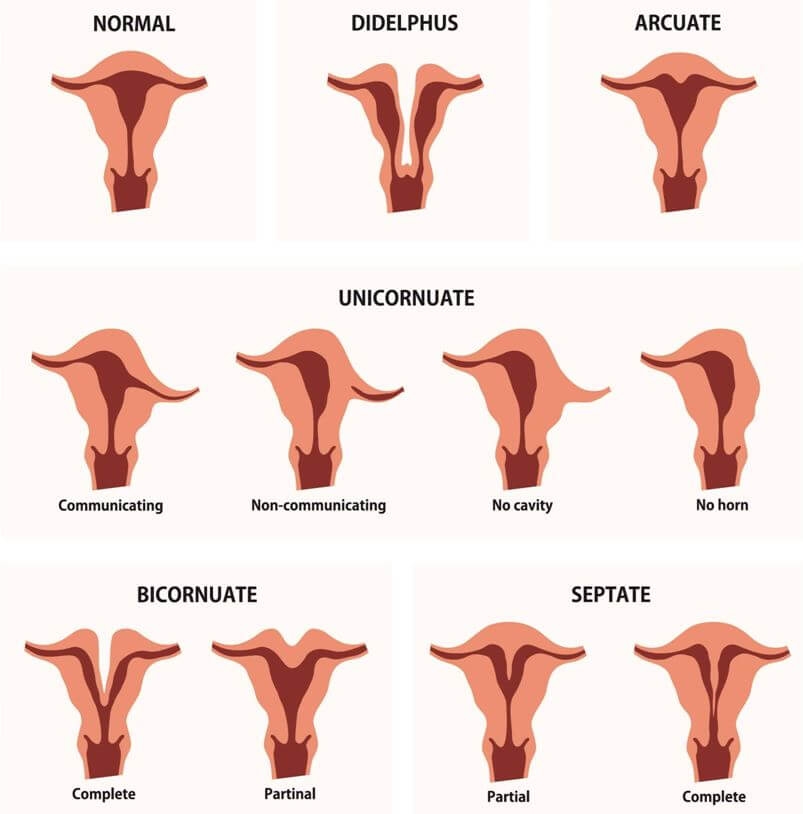
Congenital uterine anomalies are structural abnormalities of the uterus that are present from birth. These anomalies can present in various forms, such as a septum (partition) dividing the uterus in half, a double uterus, a half-shaped uterus, or problems related to the connections between the uterus, cervix, and vagina. In some cases, patients may also experience kidney abnormalities. While many women with congenital uterine anomalies can become pregnant, some may face an increased risk of infertility, miscarriage, preterm birth, and other pregnancy complications.
There are several types of congenital uterine anomalies, including the following:
Uterine septum: This is the most common type of congenital uterine anomaly and is characterized by a partition wall (septum) within the uterus.
Unicornuate uterus: This is a rare uterine anomaly where one side of the uterus does not fully develop, resulting in a smaller uterus.